There is something quietly revolutionary about a small garden done well. It does not apologize for its size. It does not try to pretend it is something it is not. Instead, it takes every square foot seriously, treats every corner as an opportunity, and produces something that a sprawling, unconsidered space almost never achieves: a feeling of completeness. Of arrival. Of a world that has been thought about and shaped with care. The best small garden design ideas do not shrink ambition to match the space. They expand creativity to transcend it. And the results, when everything comes together, are often more beautiful, more personal, and more deeply satisfying than gardens ten times the size. If you have a small outdoor space and you have ever looked at it and felt a mixture of frustration and possibility, this is for you. The possibility is real. The transformation is closer than you think.
The Psychology of Small Outdoor Spaces
Before any plant is chosen or any paving is laid, it helps to understand something about how small spaces work psychologically. The human brain responds to outdoor environments in ways that are shaped less by their objective size and more by how they feel. A small space that is cluttered, unplanned, and without clear purpose feels smaller than it is. A small space that is designed with intention, clear structure, and visual depth feels larger, calmer, and more generous than its measurements suggest. This is not wishful thinking. It is environmental psychology, and it is the reason why some of the world’s most celebrated garden designers have always argued that small spaces are the ultimate test of design skill. There is nowhere to hide a mistake. Every decision shows. And every good decision rewards the observer with something precise and beautiful.
The Importance of a Single Strong Design Concept
The single most common mistake in small garden design is the absence of a clear concept. Without one, a small garden becomes a collection of individual impulses, a plant bought because it was beautiful at the nursery, a piece of furniture chosen for its price, a path laid because the ground needed covering, none of it speaking to anything else. The result is visual noise, and visual noise in a small space is genuinely oppressive because there is no distance from which to escape it. A strong design concept does not need to be complicated. It can be as simple as a commitment to a Japanese-inspired calm, or a Mediterranean palette of terracotta, lavender, and olive, or a lush cottage abundance of climbers and perennials. What matters is that every subsequent decision is tested against it. If something fits the concept, it earns its place. If it does not, it does not belong, regardless of how much it appeals in isolation.
Zoning a Small Garden to Create Multiple Experiences
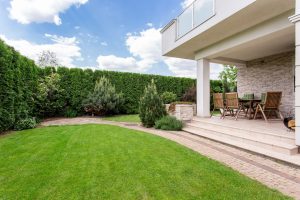
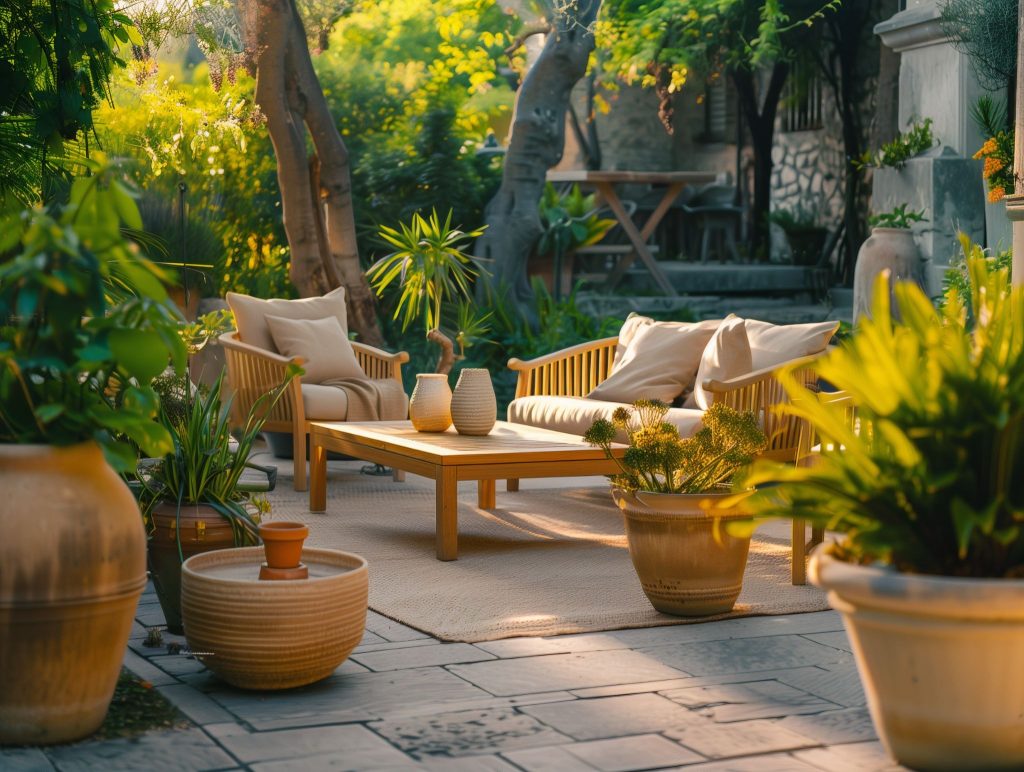
One of the most counterintuitive but consistently effective small garden design ideas is the creation of distinct zones within a small space. The instinct in a small garden is often to keep everything open, to avoid dividing the space for fear of making it feel even smaller. But division, done thoughtfully, does the opposite. It creates mystery. It creates the sense that there is more to explore, that the garden extends beyond what is immediately visible. Even the most modest small garden can accommodate two or three distinct areas: a seating zone, a planting zone, and perhaps a transitional zone connecting them. These zones do not need to be separated by walls or tall hedges.
Vertical Space: The Most Underused Asset in Small Gardens
If there is one principle that separates genuinely clever small garden design ideas from merely adequate ones, it is the use of vertical space. Most garden owners think in two dimensions: the ground plane. They plan where plants go, where paths go, where furniture goes. The best small garden designers think in three dimensions, treating walls, fences, and the airspace above the ground as opportunities every bit as valuable as the soil itself. In a small garden, vertical surfaces often represent more usable growing and design space than the ground does, and exploiting them transforms the experience of the space completely.
Climbing Plants That Transform Walls and Fences
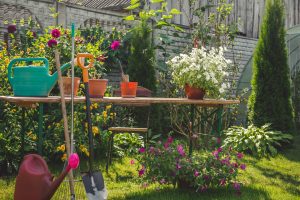
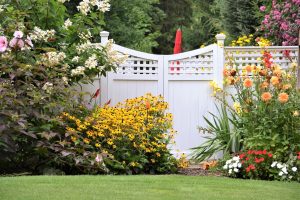
Walls and fences in a small garden are not neutral backgrounds. They are the largest surfaces in the space, and what happens on them has more visual impact than almost anything else in the garden. Covering these surfaces with climbing plants is one of the most transformative and cost-effective small garden design ideas available. A fence covered in Clematis montana in full spring flower is not a boundary. It is a spectacle. A wall threaded with the glossy, dark leaves of Trachelospermum jasminoides, which blooms with intensely fragrant white flowers in summer, becomes a sensory feature that draws every visitor toward it. Rosa ‘Zéphirine Drouhin’, a thornless climbing rose with deep pink, heavily fragrant blooms, performs magnificently on a north-facing wall where many plants struggle. Each of these choices does something that no ground-level plant can do: it lifts the garden upward, drawing the eye up and out rather than down and inward, and that upward movement makes the space feel taller, more generous, and more dramatic.
Paving, Flooring, and the Ground Plane in Small Gardens
What happens underfoot in a small garden is as important as what happens at eye level, and yet it is one of the most frequently underinvested elements of small garden design. The choice of paving material, its color, its texture, its pattern, and the way it meets the planted areas and boundaries, shapes the entire character and perceived scale of the space.
Using Paving Patterns to Influence Perceived Size
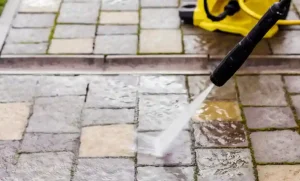
The direction in which paving units are laid has a measurable effect on how a small space is perceived. Paving laid in long horizontal lines running away from the viewer creates an illusion of depth, making the garden feel longer than it is. Diagonal paving patterns draw the eye across the widest part of the space and make a narrow garden feel broader. Large format paving units, used consistently across a small space, reduce the number of joints visible and make the ground plane feel less busy and more expansive. Small cobbles or brick pavers, while beautiful, multiply the number of visual elements and can make a small space feel more complex and potentially busier than intended.
Water Features and Sensory Elements in Small Garden Design
A water feature in a small garden might seem like an extravagance, but it is one of the most powerful tools available for transforming the sensory quality of a compact outdoor space. Water does several things simultaneously that are difficult to achieve any other way. It adds sound, masking urban noise and creating a private acoustic environment within the garden. It adds movement, bringing a living quality to the space that static elements cannot provide. It reflects light, brightening shady corners and creating visual depth. And it creates an ecological richness by attracting birds, insects, and other wildlife that add their own layer of life and interest to the space.
Choosing the Right Scale of Water Feature
Scale is everything with water features in small gardens. A vast, formal stone pool that would be magnificent in a large garden becomes an obstacle in a small one, consuming ground space and visual attention in a way that overwhelms rather than enriches. The most effective water features for small spaces are those that achieve maximum sensory impact with minimum footprint. A wall-mounted fountain that falls into a narrow rill or a small basin takes up almost no ground space while delivering the sound and visual movement of flowing water. A half-barrel water garden planted with a dwarf water lily and a few oxygenating plants creates a complete miniature water ecosystem in a container that requires only half a square meter of space. A slender steel or stone trough filled with water and a single aquatic plant becomes a design feature of real elegance in a contemporary small garden.
Final Thoughts
Small garden design ideas are ultimately ideas about how to live better in the space you actually have rather than the space you might wish for. The gardens that move people most deeply are rarely the largest ones. They are the ones where every detail has been considered, where the planting rewards close inspection, where the light at a particular time of day falls on something beautiful, and where sitting in the space feels like genuine rest rather than an afterthought. Achieving this in a small space is harder than achieving it in a large one, but the reward is proportionally greater. When a small garden works, it works completely. It becomes a world within itself, a private outdoor room that holds everything it needs and nothing it does not, and that precision is its own kind of luxury.